
Solo Practice
No More Room in Hell 2 Solo Mode Complete Guide
No more room in hell 2 solo mode lets one player practice maps, objectives, combat, and builds without permadeath, but normal progression is disabled.
 Official 1.0 Launch Trailer
Watch the Armageddon launch overview.
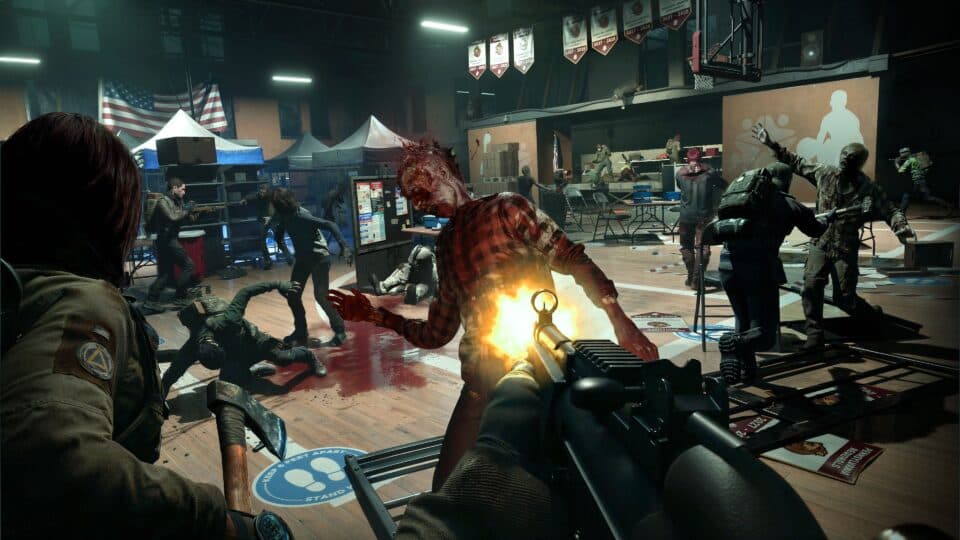
Watch on YouTubeNo More Room in Hell 2 has a Solo Mode, but it is a practice sandbox rather than the full co-op progression experience. One player can learn maps, rehearse objectives, explore routes, test combat, and use a geared Responder without permadeath. Traditional character progression is disabled.
What Solo Mode is for
Solo Mode arrived with the Armageddon 1.0 release on August 11, 2026. It gives an independent player space to understand objectives and combat before entering an online squad. A failed practice run does not permanently remove the selected Responder.
The mode is especially useful for learning the shape of all nine 1.0 maps. Players can examine routes, find objective spaces, compare melee and firearm behavior, and see how inventory weight affects preparation. That knowledge can reduce confusion when a live squad is moving under pressure.
Solo should not be described as a separate story campaign. The collected official material calls it a learning and experimentation space and does not promise cinematic or narrative campaign progression. Any future campaign feature is 待确认.
Solo rules compared with co-op
The central difference is progression risk and reward. Traditional character progression is disabled in Solo, and permadeath does not apply. Regular co-op missions instead connect successful extraction to Character XP, Credits, supplies, and the long-term Responder roster.
| System | Solo Mode | Regular co-op | | --- | --- | --- | | Players | 1 | Up to 8 | | Traditional progression | Disabled | Enabled under mode rules | | Permadeath | Disabled | Depends on difficulty and mission state | | Map practice | Supported | Learned under live squad pressure | | Crossplay squad | Not applicable | Supported |
The safe rules should not be carried into a normal mission. Hard and Nightmare expose an active Responder to permanent loss from deployment, while even Beginner and Normal can lose a character after a full wipe or death after extraction is called. Solo practice removes that consequence only inside Solo.
Maps available for practice
Version 1.0 contains six Objective maps: Power Plant, Pottsville, Lewiston, Broadway, Beaulieu Hospital, and Raven Rock. Each uses distinct spaces and task sequences. Solo exploration can help a player identify regrouping paths, interiors, hazards, and final movement before teammates depend on that knowledge.
The three Survival maps are Flooded, Lighthouse, and Night of the Living Dead. Survival normally provides preparation time, then asks the team to defend a speaker for five minutes at successive points. Three successful waves call a helicopter, while two failed waves open early extraction.
The exact way every co-op wave or objective scales for one Solo player is 待确认 beyond the official statement that Solo supports map and objective practice. Do not convert a Solo enemy count or route into a universal co-op rule. Objective pressure also scales with remaining players in regular play.
Combat and build testing
Use Solo to compare one-handed and two-handed melee commitments. Blunt weapons emphasize stability damage and knockdowns, while slashing weapons emphasize direct damage and limb removal. Firearms trade ammunition weight and noise for range, damage, and penetration.
A practical test includes one melee answer, one firearm supported by available ammunition, and space for medical or infection tools. Larger calibers add damage and penetration but generally cost more weight and recoil. Suppressors reduce zombie perception, while optics improve accurate follow-up shots.
The purpose is to understand tradeoffs, not to declare one permanent best build. Armageddon changed melee statistics, ammunition spawns, Skills, item availability, and Tier 3 weapon placement. Launch-week tuning also changed prices and availability, so current meta values need a live version check.
Use the tutorial and Training Range first
The guided tutorial covers melee, ranged combat, objectives, and inventory management. The Training Range contains weapons, ammunition, medical items, and objective practice. It is the fastest place to understand basic inputs before using a full map for route learning.
After that, Solo Mode provides context that a static range cannot. Players can practice changing from a flashlight to a two-handed weapon, using the compass and objective text, choosing when to avoid enemies, and reserving ammunition for runners or high-pressure threats. These are the same habits that keep a co-op squad moving.
The tutorial does not replace team communication. It cannot reproduce sharing treatment, protecting an interaction, reviving a downed teammate, or coordinating extraction. Use it as onboarding, then use Beginner co-op to learn those social systems.
What Solo cannot reproduce
The normal game is designed around separated spawns, regrouping, shared supplies, proximity communication, infection disclosure, revival, and team extraction. A single player does not experience the same division of roles. Resource decisions also change when one inventory replaces several coordinated loadouts.
Solo does not provide traditional character progression. Time spent there should be valued as practice rather than a farming route. Exact account rewards, if any auxiliary rewards exist after later updates, are 待确认.
It also removes permanent-death risk, which changes how aggressively a player can test a route. A mistake that is informative in Solo can permanently remove a developed Responder on Hard or Nightmare. Rehearse freely, then reset expectations before entering co-op.
Launch issue on console Solo Mode
The August 13 launch-week report said Beginner supply drops could fail to appear in Solo Mode on PS5 and Xbox Series X|S. This was a documented launch-window problem, not an intended rule. The supplied material does not explicitly confirm its status after every later patch.
The current state of that specific supply-drop issue is therefore 待确认. Check the latest official update notes if it occurs. Do not apply the report to PC or to all difficulty settings without newer evidence.
Other launch updates addressed server stability and customization crashes. Those changes matter less inside the practice premise but show why a version date belongs on troubleshooting advice. A 1.0 launch report is not automatically a current bug list.
A useful Solo learning plan
Start with the tutorial and Training Range. Enter an Objective map to follow the mission markers without rushing, then repeat the route while carrying a realistic melee, firearm, and treatment setup. Use the compass and objective text whenever the next action is unclear.
Next, practice recognizing infection pressure and conserving inventory space. Phalanx delays infection but does not cure it, while Gene Therapy is the actual cure under the current material. The precise location of a treatment can vary, so the goal is recognizing the decision rather than memorizing an unsupported guaranteed spawn.
Finally, enter Beginner or Normal co-op and stay with the main group. Share ammunition and medical items, announce symptoms, and protect objective interactions. Solo has done its job when the player can contribute without assuming its progression and permadeath rules still apply.